In the modern digital landscape, user patience is a diminishing commodity. When a person visits a web application, they expect pages to load near-instantaneously. Studies consistently demonstrate that even a one-second delay in page load time can lead to significant drops in conversion rates, increased bounce percentages, and a measurable decline in overall user satisfaction. Search engines also penalize sluggish platforms, factoring page speed directly into their search ranking algorithms.
The primary obstacle to a fast web experience is latency, which is the time delay that occurs as data travels across the internet from a user’s device to a hosting server and back again. When a web application relies entirely on a single centralized origin server, users who are geographically distant from that server experience severe delays. To overcome this physical limitation, digital enterprises rely on Content Delivery Networks. A Content Delivery Network is a globally distributed system of proxy servers designed to optimize data transmission speeds and bring web content closer to end-users.
The Problem of Physical Distance and Network Hops
To understand how a Content Delivery Network operates, one must first look at how standard internet routing functions without optimization. The internet is fundamentally a physical network composed of underground and undersea fiber-optic cables. Data cannot travel faster than the speed of light within these glass fibers.
When a user in London attempts to access a web application hosted on an origin server in San Francisco, the request must travel thousands of miles. This journey is not a straight path. The data packet must pass through numerous interconnected hardware devices, including local internet service providers, regional routing hubs, and international backbone switches. Each of these connection points is known as a network hop. Every network hop introduces a microscopic delay as routers process the packet headers and determine the next destination.
During peak traffic hours, routing hubs can become congested, leading to packet loss and queueing delays. The total time required for a data packet to travel from the user to the origin server and return a response is known as Round Trip Time. When the Round Trip Time is high, the web application feels unresponsive, causing media elements to buffer and interactive features to lag.
The Architecture of a Content Delivery Network
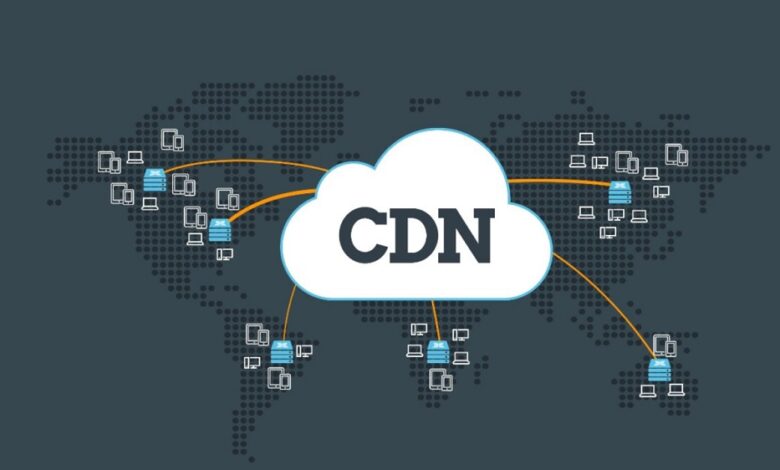
A Content Delivery Network solves the problem of distance by replacing a centralized architecture with a highly distributed network topology. The core infrastructure consists of strategically located installations known as Points of Presence.
Points of Presence
A Point of Presence is a physical data center located at a critical intersection of global internet traffic. These data centers are positioned within high-density metropolitan areas and inside major Internet Exchange Points, which are locations where different internet service providers connect their networks to share traffic. By placing infrastructure inside these exchange hubs, Content Delivery Networks can communicate with local ISPs directly, bypassing unnecessary intermediate routing hops.
Edge Servers
Inside every Point of Presence sits a cluster of high-performance caching servers known as edge servers. These edge servers act as localized proxies for the central origin server. Instead of sending every single user request across an ocean to the origin website, the Content Delivery Network intercepts the request at the nearest edge server, processing the data locally and drastically slashing the physical distance the data must travel.
How Edge Caching Eliminates Latency
The most powerful mechanism a Content Delivery Network uses to boost performance is edge caching. Caching is the process of storing copies of files in a temporary storage location so that future requests for that data can be fulfilled much faster.
When a user requests a webpage from an optimized application, the request is automatically routed to the geographically closest edge server. If the edge server already possesses a copy of the requested files in its local storage, it delivers the assets directly to the user. This event is known as a cache hit. Because the data only travels a short distance across a local network, the webpage renders almost instantly.
If the edge server does not contain the requested file, an event known as a cache miss occurs. In this scenario, the edge server contacts the central origin server on behalf of the user, pulls the fresh file across the long-distance network, delivers it to the user, and simultaneously saves a copy in its local cache storage. Subsequent users in that same geographical region requesting that same file will experience a cache hit, benefiting from the newly stored local copy.
Managing Static Versus Dynamic Content
Web application assets are divided into two distinct categories: static content and dynamic content. Content Delivery Networks handle these data types using different optimization strategies.
Static Content Optimization
Static content refers to files that do not change based on user identity or real-time inputs. This includes image files, video files, static HTML pages, cascading style sheets, and JavaScript files. Because these assets are identical for every user, they are perfect candidates for long-term edge caching. Content Delivery Networks can cache these files for days or weeks at a time, removing up to ninety percent of the data delivery burden from the origin server.
Dynamic Content Acceleration
Dynamic content consists of data that changes constantly or is personalized for a specific user, such as a customized user profile page, an e-commerce shopping cart update, or a live stock market feed. Because this data is unique, edge servers cannot store a permanent copy locally.
To lower latency for dynamic content, Content Delivery Networks use advanced connection optimization techniques. They maintain persistent, pre-warmed open connections between the edge servers and the origin server. This eliminates the latency overhead caused by the constant opening and closing of network sockets and cryptographic handshakes.
Additionally, Content Delivery Networks run sophisticated routing algorithms that analyze global internet congestion in real time. They route dynamic data requests along the fastest, least congested network paths, effectively creating a private express lane for web application traffic.
Additional Performance and Security Benefits
While latency reduction is the primary goal, the structural design of a Content Delivery Network provides several secondary operational advantages that enhance web application resilience.
-
Origin Offloading: By handling the vast majority of user requests at the edge, a Content Delivery Network prevents the central origin server from becoming overwhelmed during massive traffic surges, ensuring the application remains online during viral marketing events or product launches.
-
Intelligent Load Balancing: If a specific edge server experience hardware issues or regional power failure, the Content Delivery Network automatically reroutes user requests to the next closest functional Point of Presence, maintaining application availability without user disruption.
-
Distributed Denial of Service Protection: The massive, distributed scale of a Content Delivery Network allows it to act as a protective barrier against cyberattacks. Volumetric attacks, which attempt to crash web applications by flooding them with malicious traffic, are absorbed and scrubbed across dozens of global edge servers before they can ever reach the core origin infrastructure.
Frequently Asked Questions
What is Anycast routing and how does it relate to Content Delivery Networks?
Anycast routing is a network addressing methodology where multiple physical servers across different global locations share the exact same IP address. When a user sends a request to an Anycast-enabled Content Delivery Network, the internet routing infrastructure automatically directs that request to the nearest physical server cluster broadcasting that address, ensuring optimal geographical routing without complex configuration.
How do edge servers know when a cached file has been updated on the origin server?
Content Delivery Networks manage cache accuracy using HTTP headers, such as Cache-Control and Time-To-Live values, which dictate how long an edge server can store an asset before checking for updates. Additionally, developers can trigger an explicit cache invalidation or purge command through the provider API, forcing all global edge servers to delete old copies and fetch fresh files immediately.
Does using a Content Delivery Network increase the complexity of SSL and TLS security?
It changes the architecture because the TLS encryption handshake must be terminated at the edge server closest to the user rather than at the origin server. This requires the application owner to deploy their SSL certificates to the network provider, allowing the edge server to decrypt requests locally, analyze them for security threats, and re-encrypt the data before sending it to the origin.
What is front-end optimization in the context of network delivery services?
Front-end optimization refers to automated adjustments made by advanced edge servers to minimize file sizes before delivery. This includes minifying JavaScript and CSS code, compressing images into modern high-efficiency formats, and combining multiple small files into unified scripts, which reduces the total data payload size and speeds up browser rendering times.
How does a Content Delivery Network improve video streaming quality for web applications?
For video delivery, edge servers utilize a technique called segmented media streaming, breaking large video files into small, bite-sized fragments. As a user watches a video, the edge server pre-fetches and caches successive fragments sequentially based on local playback speeds, preventing mid-video buffering spikes and allowing users to skip to different sections of a video smoothly.
What happens to a user request if a Content Delivery Network provider suffers a total global outage?
If a provider suffers a catastrophic failure, applications utilizing automated DNS failover strategies will rewrite their routing policies, instructing domain name servers to bypass the edge network entirely and route user traffic directly to the original backup servers, ensuring continuity although with higher latency.
Can a Content Delivery Network accelerate database queries for transactional applications?
Traditional caching networks cannot cache raw database queries directly because data states shift rapidly. However, modern providers offer edge computing services, allowing developers to deploy lightweight database replicas or serverless code functions directly inside the edge nodes, processing small localized database transactions near the user to circumvent long-distance origin round trips.